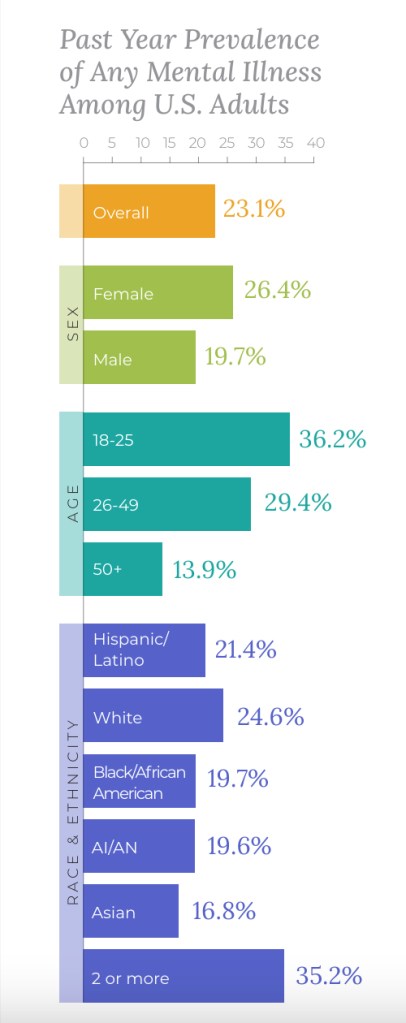
Mental illnesses are medical conditions that disrupt a person’s thinking, feeling, mood, ability to relate to others, and daily functioning. Mental illnesses affect over one in five people in any given year. People affected more seriously by mental illnesses number about 1 in 25. Mental illnesses can affect persons of any age, race, religion, political party, or income. It should be noted that the pandemic had a negative impact on the mental health of people of all ages, with the rates of depression and anxiety increasing greatly – by 25% globally, according to the World Health Organization.
Examples of mental illnesses include major depression, schizophrenia, bipolar disorder, obsessive compulsive disorder (OCD), anxiety, panic disorder, post-traumatic stress disorder (PTSD), eating disorders and borderline personality disorder. There is a continuum, with good mental health on one end and serious mental illnesses on the other end.
Mental illnesses are treatable. Most people diagnosed with a serious mental illness can get better with effective treatment and supports. Medication alone is not enough. Therapy, peer support, nutrition, exercise, stable housing, and meaningful activities (school, work, volunteering) all help people recover.
The Substance Abuse Mental Health Services Administration (SAMHSA) defines recovery as a process of change through which individuals improve their health and wellness, live self-directed lives, and strive to reach their full potential. Recovery is characterized by growth and improvement in one’s health and wellness that may also involve setbacks. Resilience becomes a key component of recovery. Some people need access to basic mental health treatment. Others need mental health support services such as case management (and/ or care coordination) to assist in locating and maintaining mental health treatment and services. Still others need more intensive, flexible services to support them to live in the community.
Although there are effective treatments and rehabilitation, the current mental health system fails to respond in a timely manner to the needs of too many children, adults, and their families. Timely access to the full array of necessary mental health benefits and services, whether treatment or rehabilitation, is often limited due to lack of insurance coverage, low payment rates, workforce shortages, or geographical or cultural disparities.
Depending on the severity of the mental illness and whether timely access to effective treatment and support services are available, mental illnesses may significantly impact all facets of living including learning, working, housing stability, living independently, and relationships.
Without access to treatment and support, people with mental illnesses may cycle in and out of the criminal justice system or homelessness, drop out of school, be unemployed and be isolated from family, friends, and the community.
 Minnesota Mental Health Legislative Network